

Salesforce Application Development Services
Salesforce Application Development Services | Custom Salesforce Solutions, CRM Integration, Workflow Automation
Extend your Salesforce capabilities with AppStudio’s application development expertise, delivering custom solutions and integrations that align with your business processes and CRM requirements.
Talk to a Salesforce Consultant
We only use your details to contact you about your Salesforce project.










Why Businesses Invest in Salesforce Application Development
Less Time Lost in the Org
Most of the time teams lose inside Salesforce goes on re-entering data and hunting across tabs. Custom application development replaces that with the fields people actually use, in the order they actually work.
Room to Grow
A standard org handles a standard business. Once pricing, approvals, or territories stop being standard, we build the parts Salesforce leaves open so the system stays ahead of the pipeline.
Better Customer Service
Service teams answer faster when history, entitlement, and the next step sit on one screen. We design Salesforce applications around the moment someone picks up the call.
Automation You Can Audit
Flow, Apex, and platform events take approvals and quotes off people and put them in the org, with an audit trail your compliance team can actually read.
Services
AppStudio’s Salesforce App Development Services
Salesforce Custom App Development
- Salesforce custom app development services on Lightning.
- Apex, LWC, and Flow built to your own process.
- Salesforce custom development with a clean handover.
Salesforce Mobile App Development
- Salesforce mobile application development for field teams.
- Offline capture that syncs when signal returns.
- Mobile experiences designed for real devices.
Salesforce Android App Development
- A Salesforce Android app development company, native Kotlin.
- Rugged device and barcode scanner support.
- Salesforce Android app development services tested on real hardware.
Salesforce iOS App Development
- Salesforce iOS app development services in Swift.
- Mobile SDK with secure token handling and biometrics.
- MDM-friendly distribution for managed fleets.
Salesforce Integration & CRM
- Salesforce integration across ERP, finance, and marketing.
- REST, SOAP, Bulk API, and platform events.
- Error handling and replay, not silent failures.
Workflow & Process Automation
- Flow, Apex, and approvals that take steps off people.
- Quote, approval, and case automation with audit trails.
- Automation kept in one predictable, maintainable place.
Salesforce Consulting
- Application development consulting from Salesforce specialists.
- An honest read on configure versus custom code.
- Consultant time without a licence upsell.
Salesforce Migration
- Move from spreadsheets or a legacy CRM.
- Data cleansing and deduplication before load.
- A rehearsed cutover with a rollback plan.
Lightning Migration & UI
- Classic to Lightning Experience without losing function.
- Visualforce reworked as Lightning Web Components.
- Screens your team will actually adopt.
AppExchange Product Development
- Managed packages built for security review.
- Multi-tenant design and licence enforcement.
- Salesforce enterprise app development for ISVs.
Experience Cloud Portals
- Customer, partner, and supplier portals.
- Sharing rules that hold up under audit.
- Self-service that reduces inbound tickets.
Org Audit & Reporting
- Review of an org nobody wants to touch.
- Conflicting automation and dead code mapped.
- Dashboards leaders trust enough to act on.

Find out what Salesforce already does before you build on top of it.
Book A Free Consultation ›We arrived with a spec for a custom module. They showed us two thirds of it was configuration we already owned, and built the rest. The result was simpler than what we had planned.Director of Sales Operations, Manufacturer, Toronto
What Sets Our Salesforce Application Development Apart
Business Priorities
Industry Gaps
Our Proven Advantage
Global Standards. Built-In Trust.
Salesforce work touches customer records and pipeline, so we treat it as regulated by default: background-checked developers, least-privilege org access, sandbox development under version control, and encryption where your policy requires it. Full source and metadata are handed over on completion, with Canadian data residency where procurement asks for it.

Book a Free Consultation
Pick a time that suits you. Describe the process that is not working and which Salesforce clouds you are licensed for, and you will get a straight view on what is configuration and what genuinely needs building. No charge and no obligation.
A Salesforce Development Company Clients Come Back To
Operations and IT leaders work with AppStudio because we scope honestly and hand the org back properly. Review platforms including Clutch, DesignRush, and GoodFirms rate us among leading custom application development companies, and much of our Salesforce work arrives through referral or from clients returning for a second phase.



The Salesforce Application Development Platform We Build On
Standard platform tooling, so another team or your own admin can pick the work up later. We will not build something clever that only we can maintain, and we will tell you when a paid add-on does the job better than custom code.
 Apex
Apex
 Lightning Web Components
 Visualforce
 SOQL & SOSL
 Flow Builder
Salesforce DX
Sales Cloud
Flow Builder
Salesforce DX
Sales Cloud
 Service Cloud
 Experience Cloud
 Marketing Cloud
 Field Service
AppExchange
Field Service
AppExchange


 REST & SOAP API
 MuleSoft
 Platform Events
 Bulk API
 Heroku Connect
 Postman
 CRM Analytics
 Tableau
Data Loader
Tableau
Data Loader
 Snowflake
 PostgreSQL
 AWS
AWS
 Git
Git
 Jenkins
 Jest
Jest
 Selenium
 Shield & Field Encryption
 Sentry
What Actually Goes Wrong on Salesforce Projects
Salesforce rarely fails because the platform cannot do something. It fails because an org accumulates years of decisions nobody wrote down: three automations firing on the same object in an order no one can predict, a validation rule from 2017 blocking a process introduced in 2024, two hundred custom fields where forty are in use, reports that disagree because the data model was never fixed. AppStudio spends real time on that inventory before proposing anything.
The second pattern is over-customisation. Salesforce ships an enormous amount of function, and it is easy to rebuild what the platform already does. We would rather deliver less custom code and an org your own admin can maintain, because the alternative is a system that depends on us permanently. That is not a favour; it is how we earn the second phase and the referral.
The third is adoption. A technically correct Salesforce application that sales staff route around is a failed project regardless of how the code reads. So we watch people work before designing screens, and we build for the way the job is actually done rather than the way the process document says it should be.
years delivering custom application development
week sandbox demos throughout every build
source code and org metadata handed over
How We Deliver Value, in Our Clients’ Words
Apps and Platforms We Have Delivered

Empowering Future Talent in Trades and Technology
Commissioned by Skills Compétences Canada, we built a national bilingual platform with native apps, a secure CMS, and Canadian cloud infrastructure to promote trades and technology careers at scale.
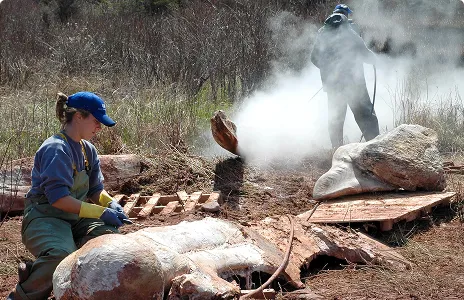
Digitizing Wildlife Surveillance for National Resilience
For the Canadian Wildlife Health Cooperative, we replaced siloed tools with a cloud-native platform that unifies field reports, lab diagnostics, and cross-province analytics in real time.
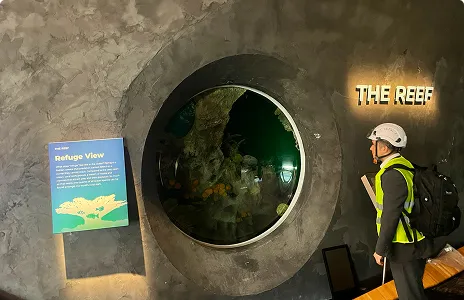
Interactive Learning Through Digital Experience
We unified kiosks, ticketing, and mobile into one cloud-native platform for Seattle Aquarium, raising visitor engagement and streamlining operations across every touchpoint.
Our Portfolio

Mindset is the Ultimate Source for Motivation, Self-development and Wisdom. With Mindset, you can play the world’s best motivational, inspirational and educational audios for free.


As part of the vision 2030, the Kingdom of Saudi Arabia has established a partnership with Zazz to modernize their nation wide mobile apps.
Canada Ontario
Built for the government of Ontario, to champion and stimulate the development of world-class technological and employability skills in Ontario youth.
Get cooking with The Roundup™, the definitive guide to buying, cooking & enjoying North American beef! This app has information on beef cuts, recipes, cooking & cuts videos to help you buy the proper cut and cook it confidently.
The app serves as a one-stop solution for Ontario’s electrical contractor community to organize and manage events, and conferences, talk to other members and share updates.
The Ideal Protein App is the digital pocket companion to the Ideal Protein Protocol. This personalized Protocol assistant is designed to help people achieve their weight loss goals and support a new, healthy lifestyle through three prioprietary phases: Weight Loss, Stabilization, and Maintenance.
Designed & Developed to save lives, and help prevent the spread of COVID 19, by providing the most reliable and up to date information needed by Employers across Canada.
Industries We Deliver Salesforce Applications For
Salesforce looks similar across sectors until you reach pricing, approvals, and compliance. These are the industries where we know the awkward parts before you have to explain them.

Manufacturing & Industrial
Manufacturing & Industrial
- Configure, price, quote for complex products.
- Dealer and distributor portals.
- ERP integration for orders and stock.

Financial Services
Financial Services
- Advisor books and referral tracking.
- Audit trails that satisfy regulators.
- Field-level encryption on client data.

Healthcare & Life Sciences
Healthcare & Life Sciences
- Patient and provider record models.
- HIPAA-aligned access controls.
- Referral and intake workflow.

Retail & Consumer
Retail & Consumer
- Clienteling and loyalty on one record.
- Commerce and service joined up.
- Store and head-office reporting.

Logistics & Transportation
Logistics & Transportation
- Field service scheduling and dispatch.
- Offline mobile capture on the road.
- Proof of delivery into the org.

Real Estate & PropTech
Real Estate & PropTech
- Listing, lease, and tenant pipelines.
- Broker commission calculation.
- Document generation and e-sign.

Professional Services
Professional Services
- Opportunity-to-project handoff.
- Utilisation and margin reporting.
- Approval chains finance accepts.

Education
Education
- Recruitment and admissions pipelines.
- Student lifecycle on one platform.
- Alumni and donor engagement.

Energy & Utilities
Energy & Utilities
- Asset and work-order management.
- Field crews working offline.
- Compliance and inspection records.

SaaS & Technology
SaaS & Technology
- AppExchange managed packages.
- Subscription and renewal tracking.
- Product usage data into the org.

Government & Public Sector
Government & Public Sector
- Case management and citizen portals.
- Data residency and audit needs.
- Procurement-friendly documentation.

Nonprofits
Nonprofits
- Donor and grant management.
- Volunteer and programme tracking.
- Right-sized for lean teams.
Choose AppStudio for Salesforce Application Development
Most people comparing Salesforce application development companies have the same problem: every proposal looks similar, every deck claims certified developers, and none of them tell you which parts of your request the platform already handles. The gap between vendors is rarely raw skill. It is whether they will scope down when scoping down is the honest answer, and whether you can maintain what they leave behind.
So we start with an audit rather than a proposal. You get a written view of your data model, the automation already running, what is configuration, what genuinely needs custom Salesforce development, and what you can skip entirely. It regularly cancels work you were about to commission. If you then want us to develop Salesforce apps against that plan, you already know exactly what you are getting. Application development consulting on its own is a perfectly good place to stop, and some clients do.
From our Toronto head office we deliver Salesforce development across Canada, the United States, and the United Kingdom. Start with a free consultation, or read more about our Salesforce app developers, cloud application development, Android application development, IoT application development, or hire app developers for other stacks.
Book A Free Consultation →
Frequently Asked Questions
Tell Us What Is Not Working in Your Org.
Get a straight view on what Salesforce already does and what genuinely needs building. Book a free consultation with a Salesforce consultant, not a salesperson.
Book A Free Consultation →
Request a Consultation
Tell us which Salesforce clouds you run and what you are trying to change, and one of our consultants will come back with a recommended scope and next steps rather than a brochure.

